Ameerpet Hyderabad

Call Now : 9390612347

Dilsukhnagar Hyderabad

Call Now : 8096061003

Mehdipatnam Hyderabad

Call Now : 9000709021

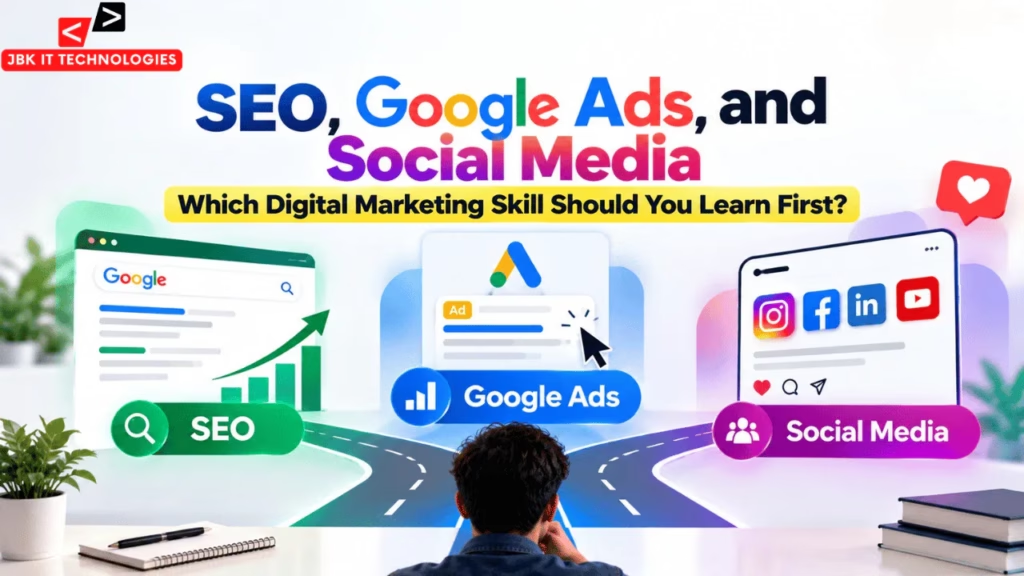
SEO, Google Ads, and Social Media: Which Digital Marketing Skill Should You Learn First?

Digital marketing includes several skills, such as Search Engine Optimization (SEO), Google Ads, social media marketing, content creation, email marketing, and analytics. For beginners, deciding which skill to learn first can be confusing because each area serves a different purpose.

Should you start with SEO to understand how websites appear in search results? Should you learn Google Ads to run paid campaigns? Or should you begin with social media marketing to understand how brands connect with audiences?

The most practical approach is to learn digital marketing fundamentals first, build a foundation in SEO and content, explore social media marketing, and then learn Google Ads and analytics. This order helps beginners understand audiences, online visibility, traffic sources, and campaign performance before managing more complex marketing activities.

In this guide, you will learn how SEO, Google Ads, and social media marketing work, how they differ, which skill to start with, and how to practise them through a simple learning plan.

1. What Is Digital Marketing?

Digital marketing is the process of promoting products, services, or brands through digital channels. These channels include search engines, websites, social media platforms, email, online advertisements, and other internet-based platforms.

For example, imagine a training institute in Hyderabad wants to increase enquiries for its digital marketing course. It could use several digital marketing methods:

  • Publish helpful blog posts to attract people searching for digital marketing information.

  • Optimise its website to improve its visibility in relevant search results.

  • Run Google Ads to reach people searching for training courses.

  • Share educational reels and student projects on social media.

  • Use analytics tools to understand which activities generate website visits and enquiries.

Each activity has a different purpose, but they can work together as part of a larger marketing strategy.

Core areas of digital marketing

SEO: Helps improve a website’s visibility in organic search results.

Google Ads: Allows businesses to run paid advertising campaigns across supported Google advertising placements.

Social media marketing: Helps brands reach audiences, share content, build relationships, and generate engagement or enquiries.

Content marketing: Uses useful content, such as blogs, videos, guides, and infographics, to inform or attract an audience.

Email marketing: Communicates with subscribers and customers through relevant email campaigns.

Analytics and reporting: Measures website activity, campaign performance, conversions, and other marketing results.

Beginners do not need to master every area immediately. Understanding the purpose of each channel makes it easier to choose a starting point.

2. Should Beginners Learn SEO First?

SEO is a useful starting point for many beginners because it introduces important digital marketing concepts: search intent, keyword research, website structure, content quality, and organic traffic.

Search Engine Optimization involves improving a website so search engines can discover, understand, and present its pages to relevant users. SEO does not guarantee a particular ranking, and results can take time.

What should you learn in SEO?

Start with these fundamentals:

Keyword research: Understand the words and phrases people use when searching for information, products, or services.

Search intent: Identify whether someone wants information, wants to compare options, is looking for a specific website, or is ready to take action.

On-page SEO: Learn how page titles, headings, URLs, internal links, and relevant content help users and search engines understand a page.

Technical SEO basics: Understand crawling, indexing, XML sitemaps, mobile usability, page accessibility, and website performance.

Content optimisation: Learn to create useful, original content that answers a reader’s question rather than repeating keywords unnecessarily.

SEO measurement: Explore impressions, clicks, click-through rate, and search queries using tools such as Google Search Console.

Practical SEO example

Suppose a website publishes a page about an Advanced Excel course. Instead of targeting only the broad phrase “Excel,” the page could address a more specific search such as “Advanced Excel course in Hyderabad.”

A beginner could research the query, understand what potential learners want to know, create a clear course page, add useful syllabus information, link to relevant articles, and measure search performance.

This exercise teaches keyword research, search intent, content optimisation, internal linking, and measurement in one project.

Advantages of learning SEO first

  • Develops an understanding of search behaviour.

  • Builds content research and website optimisation skills.

  • Introduces organic traffic and long-term content planning.

  • Helps you understand how website pages support marketing goals.

  • Creates a foundation for understanding paid search campaigns.

Important: SEO is not a shortcut to instant traffic. Rankings depend on multiple factors, competition, content quality, website conditions, and search engine systems.

3. When Should You Learn Google Ads?

Google Ads is a paid advertising platform that businesses use to reach audiences through search and other supported placements. Unlike organic SEO, advertising campaigns can begin reaching eligible audiences after approval and launch, depending on targeting, budget, competition, and campaign settings.

Google Ads is especially useful to learn when you understand what customers search for and how a business converts interest into enquiries or sales.

Important Google Ads skills

Campaign structure: Understand the relationship between campaigns, ad groups, ads, and keywords in Search campaigns.

Keyword targeting: Research relevant search terms and learn how keyword match types and negative keywords affect targeting.

Ad copywriting: Write clear headlines and descriptions that match the user’s search and explain the value of an offer.

Budget and bidding: Understand daily budgets, bidding strategies, cost per click, and how auction competition affects advertising.

Audience and location targeting: Learn how to reach suitable audiences and configure geographic targeting when relevant.

Landing page optimisation: Ensure the page matches the ad message and makes the next action clear.

Conversion tracking: Measure valuable actions such as enquiry submissions, calls, purchases, or registrations.

Practical Google Ads example

A training institute wants to generate enquiries for an AutoCAD course. A beginner could create a sample Search campaign targeting relevant course-related searches.

The exercise would involve choosing keywords, writing ad copy, setting a test budget, preparing a relevant landing page, and defining an enquiry conversion.

Before spending real money, practise with a campaign plan or draft campaign settings. If you run a live campaign, use a controlled budget and verify conversion tracking before evaluating performance.

When is Google Ads a good starting point?

You may prioritise Google Ads earlier if your goal is to work specifically in paid advertising or performance marketing. However, learn the basics of audience intent, ad relevance, landing pages, budgets, and measurement before managing campaigns independently.

4. Why Learn Social Media Marketing?

Social media marketing focuses on communicating with audiences through platforms such as Instagram, Facebook, LinkedIn, and YouTube. It includes organic content, community interaction, content calendars, and paid social campaigns.

This area can be an approachable starting point for beginners who enjoy content creation, visual design, communication, and understanding online communities.

Essential social media skills

Platform selection: Understand which platforms suit different audiences and business objectives.

Content planning: Create a content calendar with educational posts, short videos, product updates, and relevant promotional content.

Creative development: Learn basic design, video editing, copywriting, hooks, captions, and calls to action.

Audience engagement: Respond to comments, understand audience questions, and maintain a consistent brand voice.

Social media analytics: Review reach, impressions, engagement, video views, profile activity, and link clicks where available.

Paid social basics: Learn how sponsored campaigns differ from organic content and how targeting, budgets, and conversion goals work.

Practical social media example

Imagine a digital marketing institute wants to promote a weekend workshop. You could plan a week of content:

  • Monday: Publish an educational post explaining the workshop topic.

  • Wednesday: Share a short video demonstrating a practical marketing task.

  • Friday: Publish the workshop details and registration instructions.

  • After the event: Share a recap and useful learning points, with appropriate permission for any participant images.

Then review the results. Did people save the educational post? Did the video attract relevant viewers? Did the registration post generate clicks or enquiries?

This exercise connects content creation with audience behaviour and measurable objectives.

Is social media marketing easier than SEO or Google Ads?

It may feel more accessible to people who already enjoy creating content. However, professional social media marketing requires planning, consistency, audience research, creative testing, reporting, and an understanding of business objectives.

Creating posts is only one part of the job.

5. SEO vs Google Ads vs Social Media Marketing

Each channel solves a different marketing problem. The right choice depends on your interests, career goals, business objectives, and the type of work you want to perform.

FactorSEOGoogle AdsSocial Media Marketing
Main purposeImprove organic search visibilityReach audiences through paid advertisingBuild awareness, engagement, and community
Traffic typeOrganicPaidOrganic and paid
Typical activitiesKeyword research, content optimisation, technical checksCampaign setup, keyword targeting, bidding, conversion trackingContent calendars, creative production, engagement, reporting
Time to resultsOften gradualCampaigns may start delivering quickly after launch and approvalVaries by content, audience, platform, and campaign
Budget considerationsRequires time and resources; rankings are not purchased directlyRequires advertising spend and campaign managementOrganic content requires resources; paid promotion needs a budget
Useful measurementsSearch impressions, clicks, rankings, organic conversionsSpend, clicks, conversions, cost per conversionReach, engagement, video views, clicks, conversions
Suitable interestsResearch, writing, websites, analysisNumbers, testing, optimisation, performanceCreativity, communication, content, community

No channel is universally better. SEO can help attract people searching for relevant information, Google Ads can target specific advertising opportunities, and social media can support discovery and ongoing engagement.

The strongest marketing plans often combine these channels instead of treating them as competitors.

6. What Should You Learn First? A Practical Learning Order

For a general digital marketing beginner, the following sequence offers a balanced foundation.

Step 1: Understand digital marketing fundamentals

Learn the customer journey, target audience, marketing objectives, website landing pages, calls to action, and basic funnel concepts.

Understand the difference between awareness, consideration, and conversion. For example, someone reading an educational blog may be at a different stage from someone submitting a course enquiry.

Step 2: Learn SEO and content basics

Practise keyword research, search intent, page titles, headings, internal linking, and useful content creation.

Create one sample article and one optimised landing page. This will help you understand how content supports organic discovery.

Step 3: Learn social media marketing

Choose a sample business and prepare a one-week content calendar. Create different content formats and identify the goal of each post.

Practise writing captions, designing creatives, selecting suitable platforms, and interpreting engagement metrics.

Step 4: Learn Google Ads fundamentals

Understand campaign objectives, keywords, ad groups, ad copy, bidding, budgets, landing pages, and conversion tracking.

Start with a campaign plan or draft setup. Learn why campaign structure and measurement matter before spending money.

Step 5: Learn analytics and reporting

Learn how to interpret data rather than simply collect it. Explore relevant reporting tools, including Google Analytics 4 and Google Search Console.

Connect activities to objectives: organic clicks, qualified enquiries, registrations, purchases, or other meaningful conversions.

Step 6: Build an integrated project

Use all three channels for one fictional or real business. Plan SEO content, social media posts, and a Google Ads campaign outline around the same objective.

This helps you understand how individual marketing activities support a broader strategy.

7. A Beginner-Friendly 30-Day Digital Marketing Practice Plan

You can use the following schedule to organise your first month. Adjust the workload according to your available time and prior experience.

PeriodFocusPractical task
Days 1–4Digital marketing fundamentalsDefine an audience, objective, and customer journey
Days 5–10SEO and contentResearch keywords and prepare an SEO-friendly blog outline
Days 11–15Social mediaCreate a seven-day content calendar and sample creatives
Days 16–21Google AdsDraft a Search campaign with keywords, ads, and a landing page
Days 22–25AnalyticsIdentify relevant metrics and prepare a simple report
Days 26–30Integrated projectPresent a marketing plan combining SEO, social media, and paid search

At the end of the month, you should have a foundation and a few sample projects. You should not expect to master every channel or achieve consistent campaign results in 30 days.

The goal is to understand how the channels work, practise essential tasks, and identify which specialisation interests you most.

8. Dashboard Examples: How to Measure Digital Marketing Results

Analytics connects marketing activity to business outcomes. Without measurement, it is difficult to determine which tasks are useful and which need improvement.

Consider a fictional training institute running SEO, social media, and Google Ads activities.

SEO dashboard

Track organic search impressions, clicks, click-through rate, important search queries, and enquiries attributed to organic search where tracking is available.

If impressions increase but clicks remain low, review the queries, search intent, page title, and description. Avoid assuming that one metric explains the entire problem.

Google Ads dashboard

Track advertising spend, impressions, clicks, click-through rate, conversions, cost per conversion, and conversion quality.

A campaign receiving many clicks may still perform poorly if those visitors do not take meaningful action. Verify tracking and examine the landing page before changing the budget.

Social media dashboard

Track relevant measures such as reach, impressions, engagement, video views, link clicks, and enquiries.

A post with high engagement is not automatically the best business performer. Compare results against the post’s objective and the quality of the audience response.

Combined reporting

A simple report should answer three questions:

  1. What happened during the reporting period?

  2. What might explain the result?

  3. What should be tested or improved next?

For example, if a campaign generates clicks but few enquiries, the next step could be to check the landing page, form usability, message relevance, and conversion tracking.

9. Career Paths Based on Your Preferred Skill

Digital marketing offers several possible specialisations. The work varies by employer, industry, experience, and business requirements.

SEO executive or SEO specialist: Works on keyword research, content optimisation, technical SEO checks, search performance, and reporting.

PPC or performance marketing executive: Manages paid campaigns, budgets, bidding, audience targeting, testing, and conversion measurement.

Social media executive: Plans content, coordinates creative production, manages publishing schedules, engages with audiences, and reports performance.

Content marketer: Researches topics, develops articles and other content, maintains content calendars, and aligns content with audience needs.

Digital marketing analyst: Helps measure marketing performance, prepare reports, identify patterns, and evaluate campaign effectiveness.

Digital marketing generalist: Works across several channels, particularly in smaller teams where one person may support SEO, social media, paid advertising, content, and reporting.

These roles are not rigid categories. For example, an SEO specialist may work closely with content writers, while a performance marketer may collaborate with designers and analysts.

Choose a starting skill based on the type of work you enjoy, then develop complementary skills to broaden your opportunities.

10. Practising Digital Marketing in Hyderabad and Dilsukhnagar

Learners exploring a digital marketing course in Hyderabad or digital marketing training in Dilsukhnagar can use local business examples to practise their skills.

For example, select a hypothetical coaching institute, café, retail store, or professional service. Research the audience, review search queries, plan useful website content, create a social media calendar, and draft a suitable advertising campaign.

You can also evaluate public-facing websites and social profiles to understand how businesses communicate their offers. Focus on observable details such as page structure, content quality, calls to action, and available engagement signals. Do not assume that a competitor’s traffic, advertising budget, or conversion results are publicly known.

For portfolio development, document your research, explain your decisions, and include sample deliverables. Clearly label simulated campaigns and hypothetical results; never present them as actual client performance.

Whether you are exploring a digital marketing course in Dilsukhnagar or learning independently, practical exercises can help you turn theoretical knowledge into demonstrable skills.

11. Common Mistakes Beginners Should Avoid

Trying to learn every tool at once

Digital marketing includes many platforms and techniques. Begin with the fundamentals, then add tools as your projects require them.

Focusing only on certificates

Certificates can demonstrate learning, but they do not replace practical ability. Build sample projects that show your research, planning, execution, and reporting process.

Expecting immediate SEO rankings

SEO is a long-term activity, and rankings are not guaranteed. Focus on useful content, website quality, technical accessibility, and ongoing measurement.

Running advertisements without tracking

Clicks and impressions do not automatically mean business success. Establish meaningful conversion actions and check that tracking works before drawing conclusions.

Publishing social media content without a goal

Every piece of content should have a purpose, such as educating an audience, building awareness, encouraging interaction, or supporting registrations.

Ignoring analytics

Learn to explain what the numbers mean, identify possible causes, and recommend a reasonable next step. Avoid making strong conclusions from limited data.

Copying competitors without understanding the audience

Use competitor research to identify common questions and content gaps. Create original content that addresses your audience’s needs instead of copying another brand’s wording or creative work.

12. Frequently Asked Questions

1. Which digital marketing skill should beginners learn first?

Start with digital marketing fundamentals, then learn SEO and content basics. Add social media marketing, Google Ads, and analytics as you develop practical experience. You can change the order if you have a clear interest in a specialisation such as paid advertising or social media.

2. Should I learn SEO before Google Ads?

For many beginners, SEO is a useful first step because it teaches search intent, keywords, content, and website structure. However, it is not compulsory to master SEO before learning Google Ads. Beginners focused on performance marketing can start with paid search fundamentals alongside basic audience and conversion concepts.

3. Is social media marketing enough to start a digital marketing career?

Social media can be a valid specialisation, but broader knowledge of content strategy, analytics, advertising, and business objectives can improve your ability to plan and evaluate campaigns. The skills required depend on the role.

4. How long does it take to learn digital marketing?

You can learn introductory concepts and complete sample projects in a few weeks with consistent practice. Developing stronger skills requires continued learning, campaign experience, testing, and reporting. The time needed depends on your starting point and the depth of knowledge you want.

5. Do I need coding knowledge for digital marketing?

No. Most beginner digital marketing tasks do not require advanced programming. Basic HTML, website concepts, spreadsheets, and simple technical knowledge can be useful, especially for SEO, tracking, and website optimisation.

6. Which is better for beginners: SEO or Google Ads?

Neither is universally better. SEO is useful for learning organic search, content, and website optimisation. Google Ads is useful for understanding paid acquisition, campaign budgets, targeting, and performance measurement. Your interests and career goals should guide the choice.

7. Can I learn digital marketing without working on a real client project?

Yes. Start with a fictional business, a personal website, or a clearly labelled sample campaign. Practise research, planning, creative development, campaign structure, and reporting. Real client work can provide additional experience when you have the opportunity.

8. What tools should a beginner learn?

Start with tools relevant to your chosen tasks. Examples include Google Search Console for search performance, Google Analytics 4 for website measurement, Google Ads for paid advertising, and the analytics features built into social platforms. Spreadsheet skills are useful for organising data and creating reports.

9. What should I include in a digital marketing portfolio?

Include keyword research, an SEO content brief, an article or landing-page plan, a social media calendar, sample creatives, a Google Ads campaign outline, and a sample analytics report. Explain the objective and process behind each item, and distinguish hypothetical results from actual measured results.

10. Is a digital marketing course in Hyderabad necessary?

A course can provide structure, guided exercises, feedback, and a learning schedule. Self-study is also possible with reliable documentation and consistent practice. Compare course content, practical projects, mentor support, and assessment methods before deciding.

Enquiry Form