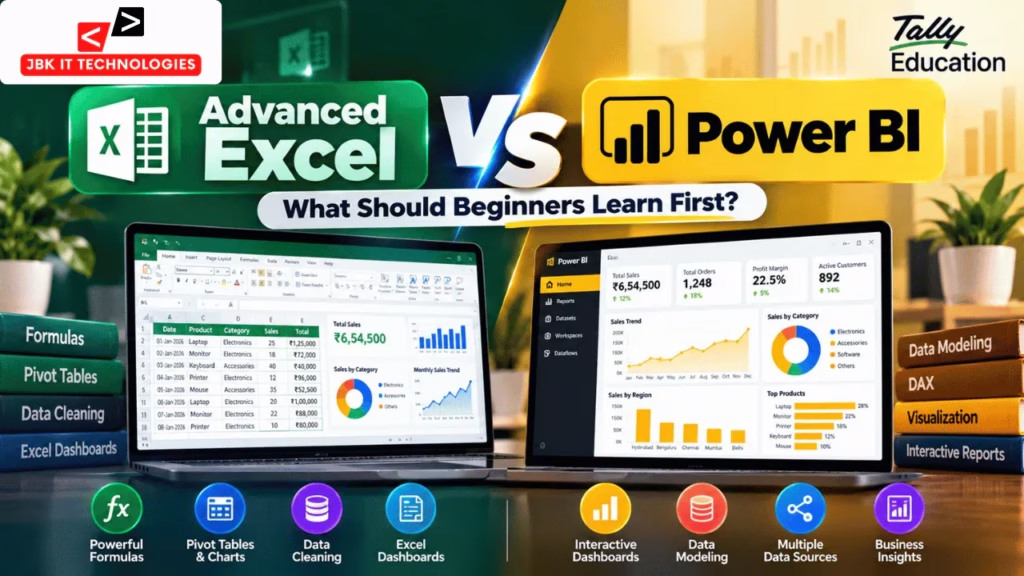
Advanced Excel refers to using Excel beyond basic data entry and simple calculations. It includes formulas, data cleaning, lookup functions, PivotTables, charts, conditional formatting and reporting techniques.
Businesses use Excel to organise information, perform calculations, analyse records and prepare reports.
For example, an organisation may maintain an Excel workbook containing monthly sales, product details, customer information and expenses. An analyst can use formulas and PivotTables to calculate revenue, compare regions and identify the best-performing products.
Important Advanced Excel skills
1. Formulas and functions
Beginners should understand functions such as:
SUM and AVERAGE
IF and IFS
COUNTIF and SUMIF
SUMIFS and COUNTIFS
XLOOKUP and VLOOKUP
IFERROR
Date and text functions
These functions help automate calculations and retrieve information from datasets. Microsoft’s Excel documentation provides examples of formulas for calculations, lookup tasks, dates and other common operations. <sup>Microsoft Support</sup>
2. Data cleaning
Real-world datasets may contain duplicate records, missing values, inconsistent dates, extra spaces and incorrectly formatted numbers.
Excel can help users identify and correct these problems using sorting, filtering, text functions, data validation and Power Query.
3. PivotTables and PivotCharts
PivotTables help summarise data by categories, dates, products or regions. PivotCharts display those summaries visually, making comparisons and trends easier to understand. <sup>Microsoft Support</sup>
4. Excel dashboards
An Excel dashboard brings important metrics and charts together on one worksheet.
A sales dashboard might show total revenue, monthly growth, top-selling products, regional performance and sales targets.
5. Reporting and analysis
Excel is useful for preparing structured reports, checking individual records, calculating business metrics and sharing spreadsheet-based analysis.
These skills make Advanced Excel an important starting point for learners interested in reporting, accounting, operations and data analytics.